Support around SDR surgery
Intensive Conductive Education before and after selective dorsal rhizotomy (SDR), working alongside your child’s physiotherapy.
Specialist rehabilitation before and after SDR
If your child is being assessed for SDR, has a surgery date or is recovering from the operation, we can help. Megan Baker House runs intensive Conductive Education courses before and after surgery, built around your child’s goals.
SDR reduces spasticity in the legs, but recovery takes time and effort. Children have to relearn how to move. The work they do before and after surgery shapes how well they recover.
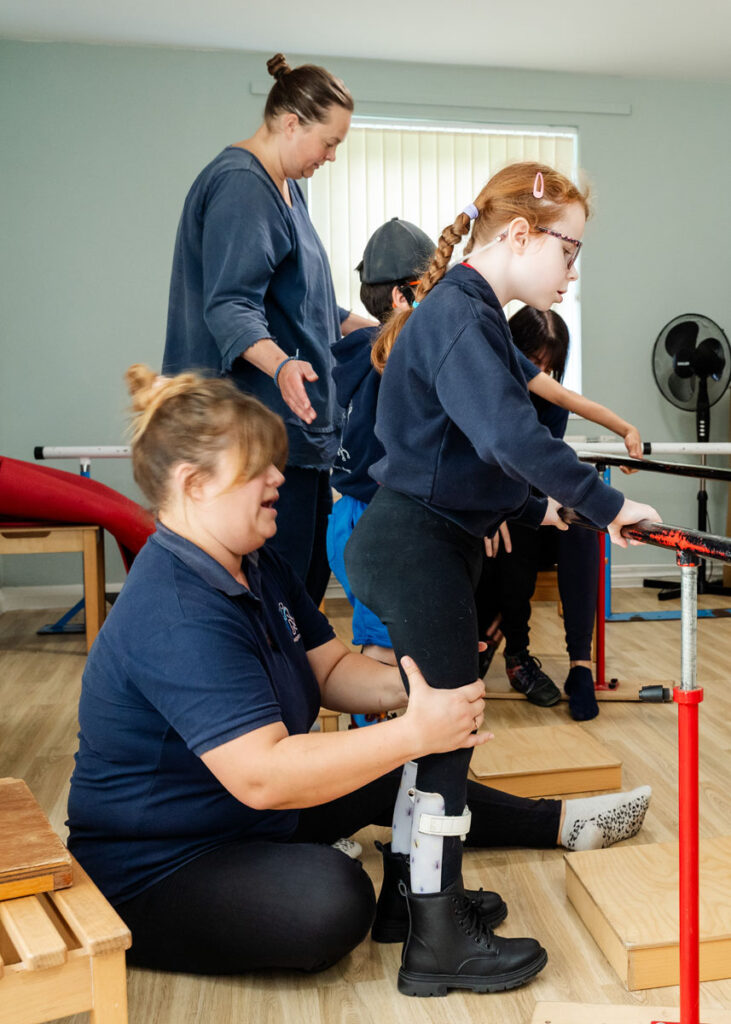
Our practitioners teach practical movement skills through active learning, so your child takes part in every session and can use what they learn at home and at school. Our courses work alongside your child’s physiotherapy. We’re happy to talk with your physio and surgical team about their shared goals.

What is SDR?
Selective dorsal rhizotomy is a surgical procedure that reduces the muscle tightness in the legs that makes movement stiff and effortful. Recovery is a long process of relearning how to move.
- What it does: Surgeons cut selected sensory nerve rootlets in the lower spine, which eases the tightness in your child’s leg muscles.
- Who it’s for: Usually children with spastic diplegia, a form of cerebral palsy that mainly affects the legs.
- What comes next: With the tightness eased, underlying muscle weakness often becomes more acute, so children still need to build strength and practise new ways of moving.
Before surgery
The more active your child is going into surgery, the better placed they’ll be to recover. Our sessions use Conductive Education to build upper body strength and teach movement patterns, so the motor learning – the way practice builds new skills – is already in place for when their recovery begins.
Upper body strength
Building the strength your child’s recovery will draw on, such as pushing up and supporting their weight.
Movement patterns
Learning and practising the patterns your child will use after surgery, so they’re familiar when recovery begins.
Active participation
Your child does the work in every session, which builds the motor learning skills that support their recovery.
Recovering after SDR
Rehabilitation should begin soon after the operation. An early start will help your child regain skills and build independence. Every session follows a task series, a set routine of activities that takes your child through three stages:
- Lying programme: Your child relearns movement patterns lying down.
- Sitting programme: Your child puts those patterns into practice while improving balance and the ability to safely shift their body weight.
- Standing programme: We support your child to further improve their balance, weight transfer and walking patterns.
Each stage builds on the previous one and we adapt the pace to suit your child. Our courses supplement physiotherapy and we can work with your child’s physio to keep their goals consistent.

The practical details
We can arrange courses around your child’s surgery date and physiotherapy, so the timing suits your family. We’ll talk you through the following details when you get in touch:
Course length
Days and hours per course, and whether sessions are group or one-to-one.
Before surgery
When to start and how often your child attends.
After surgery
When courses can begin and how long each block of sessions lasts.
Where
Our Ledbury therapy centre, plus venues across Gloucestershire, Shropshire and Worcestershire. We can also do home and school visits by arrangement.
Get support
Costs and funding
Our sessions are subsidised, and several trusts fund Conductive Education for children. Ask us and we’ll point you towards the right one.
If your child is being assessed for SDR or has a date for surgery, get in touch. We’ll talk you through what we can do and when.