Stroke – How can Conductive Education help?
August 17, 2026
Stroke – How can Conductive Education help?
Stroke – How can Conductive Education help?
How does Conductive Education support someone who has had a stroke?
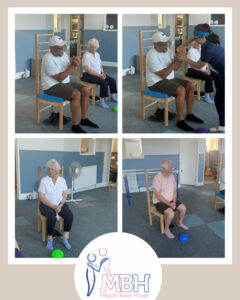
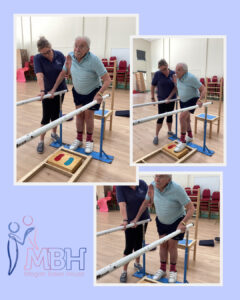
For someone who has had a stroke, Conductive Education can support recovery in several ways. When a stroke happens, certain areas of the brain are affected and don’t work like they used to anymore, but the brain is incredibly resilient, thanks to neuroplasticity. Neuroplasticity is the ability of the brain to re-route and create new neural pathways to circumvent the damaged areas. CE uses various tools to encourage neuroplasticity and help our participant re-learn how to use their body after a stroke. During our sessions, we promote neuroplasticity with:
- Using repetition and routine: repeated, purposeful practice reinforces the new neural pathways and can help the person develop better control, coordination, balance, and posture.
- Encouraging active participation: rather than having someone to do things for the person, CE encourages them to actively work out how to complete tasks themselves, so that their brain can master control over those movements.
- Building independence: activities practiced during sessions may focus on practical skills such as getting out of bed, standing, walking, dressing, eating, or using the affected arm.
- Developing problem-solving skills: the participant is encouraged to understand how to perform a movement and find strategies that work for them, this helps reinforce the pathways responsible for motor planning.
- Supporting confidence and motivation: group activities, achievable goals, and encouragement can help reduce frustration and increase willingness to participate.
- Addressing communication and cognitive difficulties: depending on the programme, activities can incorporate speech, attention, memory, sequencing, and following instructions, to target the neural pathways responsible for speech communication.
- Promoting social interaction: group-based conductive sessions can provide opportunities to communicate with and learn alongside others who have similar challenges.
The underlying idea is that rehabilitation is not just about strengthening muscles—it is about helping the person learn or relearn functional skills so they can participate more independently in everyday life.
Some of our participant feedback:
‘MBH has improved my mental health by communicating with very friendly staff and fellow members.
Getting dressed in the morning is now easier thanks to the exercises.
My walking has improved.
My leg and arm movement, particularly on my left side has improved’ – John