Celebrating Parkinson’s Awareness Month – Why Conductive Education is Interesting for Parkinson’s
April 29, 2026
Celebrating Parkinson’s Awareness Month – Why Conductive Education is Interesting for Parkinson’s
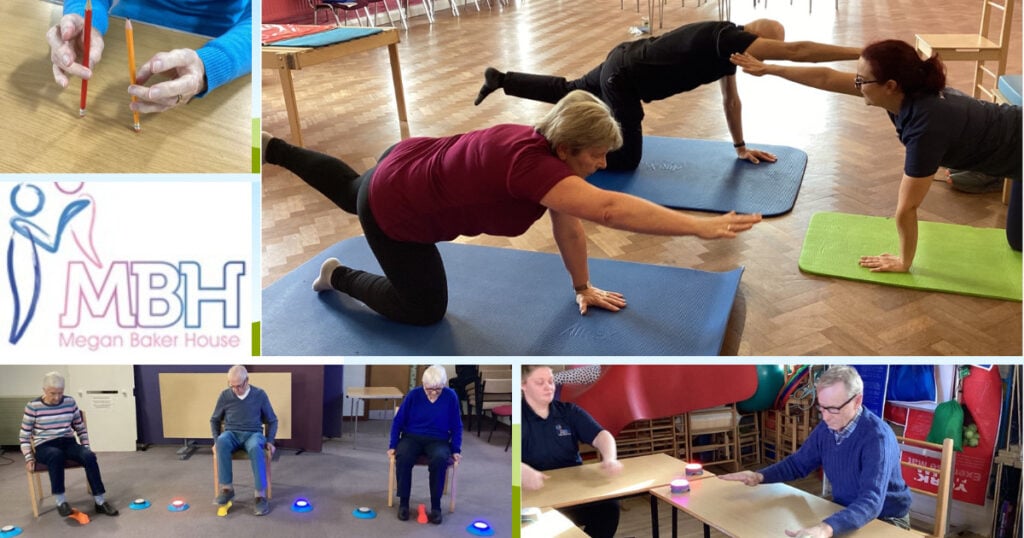
Parkinson’s is often associated with movement difficulties such as stiffness, slowness and challenges with balance. Many traditional approaches focus on managing these symptoms, but Conductive Education (CE) offers something a little different, which is what makes it so effective.
At its core, Conductive Education doesn’t just aim to treat movement problems.
It helps people learn how to take back control of their movements.
A Different Way of Thinking
Rather than seeing movement difficulties purely as a medical issue, CE approaches them as a learning challenge.
This means:
* Breaking movements down into manageable steps
* Using rhythm and intention to guide action
* Encouraging people to stay actively involved in their own progress
For individuals with Parkinson’s, this is particularly powerful. The condition often affects the brain’s ability to carry out automatic movements—like walking or turning. CE responds by helping people use conscious control and focus to overcome these challenges.
In a Conductive Education session, you might see participants:
* Practising walking using rhythmic cues
* Working through everyday tasks step-by-step
* Supporting and motivating each other in a group environment
* Combining movement, speech and thinking to improve coordination
It’s not about doing exercises with someone—it’s about learning skills with them.
More Than Movement
One of the most powerful aspects of CE is that it doesn’t just focus on physical ability. Many people report improvements in:
* Confidence and independence
* Motivation and mood
* A sense of achievement and control
This holistic approach is central to what we do at Megan Baker House—supporting people not just to move better, but to live better!
Why It Matters
The most interesting thing about Conductive Education and Parkinson’s is simple:
It shifts the focus from “what has been lost” to “what can still be learned.”
And that shift can make a meaningful difference in how people experience their condition every day.
Our next blog edition will be focusing on how CE can help in a school setting.